
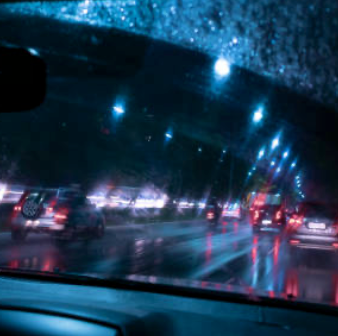
You're driving home after dark. It's raining. A car comes the other way, and suddenly its headlights explode across your windshield in long, blurry streaks. For a second or two, you can't really see the road.
If this happens to you, you're not imagining it, and it's not just your eyes. Rain and darkness make glare worse, and your windshield plays a big part in it.
Here's what's going on, and what you can do about it.
Why glare gets worse on your windshield at night
A clean, smooth pane of glass lets light pass straight through. Light from a headlight travels through and reaches your eyes as a clear, defined point.
But when the glass is covered in anything, such as a thin film, dust or water, the light no longer passes cleanly. It hits those particles and spreads in all directions. That scattered light is what you see as glare, halos and long streaks.
At night, this effect is much stronger because your eyes are wide open to catch as much light as possible. A bright headlight against a dark background is the perfect setup for glare.
What's on your windshield (that you can't see in daylight)
The problem is that a windshield can look fine during the day and still be covered in things that scatter light at night.
Oily and greasy film. Road grime, exhaust residue, insects, tree sap and traces of oil build up on the outside of the glass. You usually don't notice it until light hits it at the wrong angle.
Wax from car washes. Some automatic car washes leave a thin layer of wax on the glass. It looks invisible, but it can smear under wipers and reflect light.
Film on the inside. The inside of your windshield collects dust, fingerprints and residue that the plastics and vinyl in a dashboard can release over time. This film often causes the "hazy" glare you get from oncoming cars.
Worn wiper marks. Old blades leave microscopic streaks. Each one catches light and stretches it into a line.
Why rain makes it so much worse
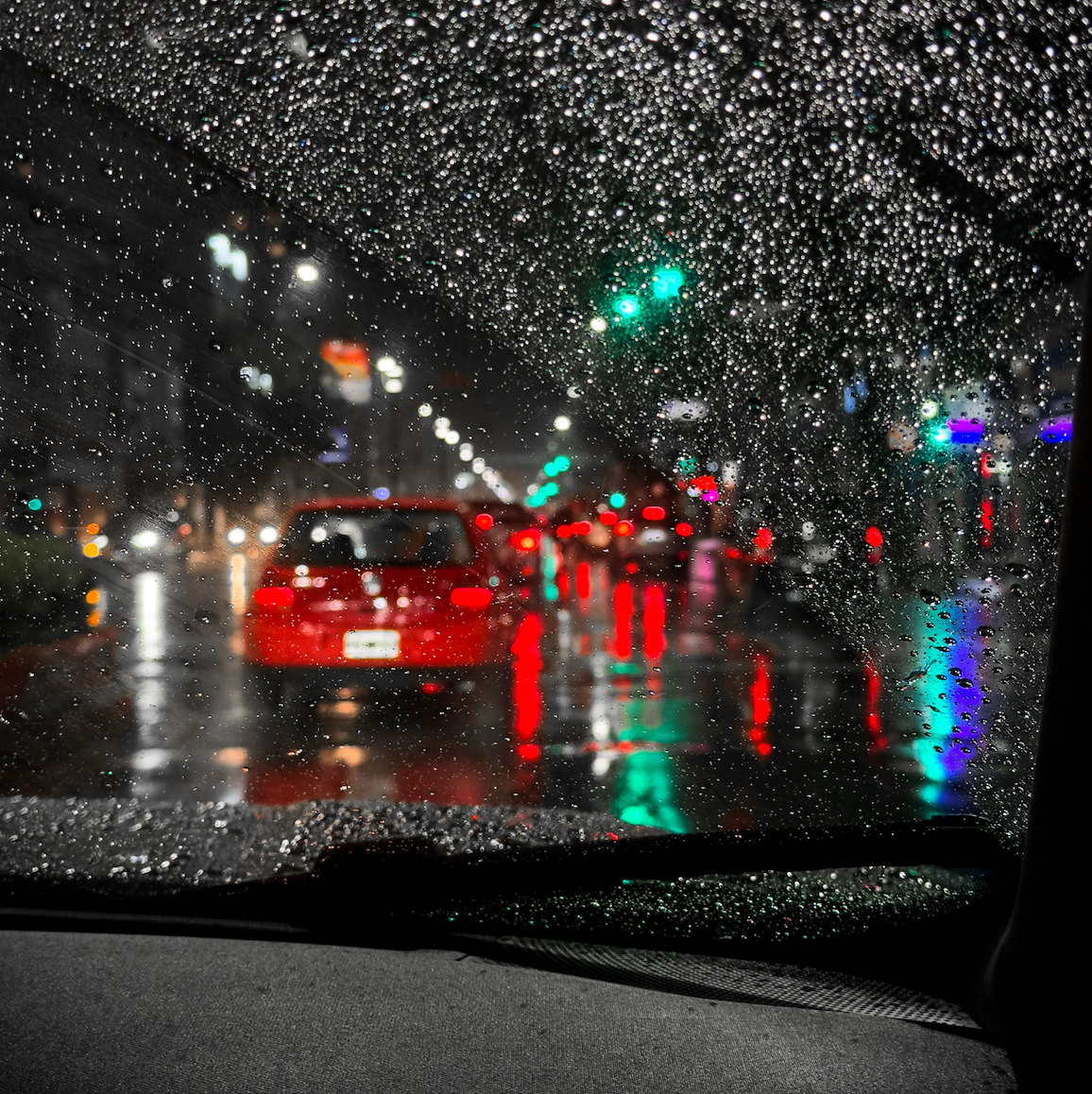
On clean glass, water forms small round droplets that roll away. On glass covered in film, water can't bead properly. It spreads into an uneven sheet with a wavy surface.
Every drop and every ripple bends light in a different direction. A single headlight becomes dozens of bright blurs. Then the wipers pass, smear that film around, and you get a temporary veil across your view until the water settles again.
That's why so many drivers describe the same thing: they can see fine when it's dry, but the moment it gets wet and dark, visibility drops sharply.
What you can do about it
1. Clean the inside of the glass
Use a clean microfiber cloth and a glass cleaner, and finish with a dry cloth. Don't reuse a cloth that already has residue on it, or you'll just spread the film around.
2. Remove the film on the outside
Rinsing with water only removes loose dirt. Oily film and residue that have bonded to the glass usually need a product designed to cut through them.
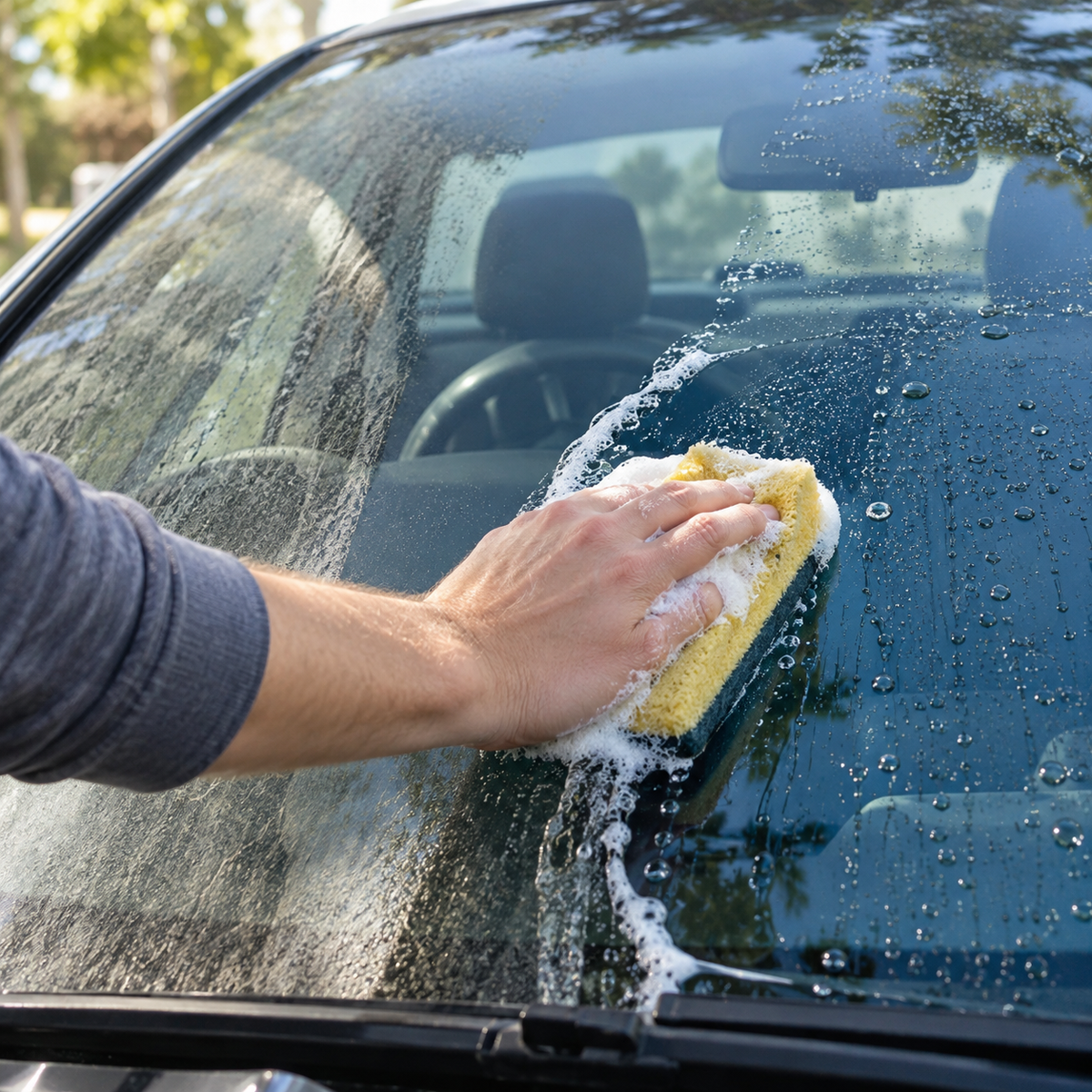
ClearShield™ is made for this. It removes grime and oily film and leaves a water-repellent finish in one application. Rinse the windshield first, activate the sponge, apply it evenly, then rinse right away. Don't let any residue dry.
3. Keep water from spreading
Once the glass is truly clean, a water-repellent layer helps water bead up and roll away instead of forming a sheet. Less water sitting on the glass means fewer surfaces for headlights to scatter on.
4. Replace worn wipers
If your blades streak, skip or squeak, replace them. Even a spotless windshield will show glare if the wipers leave lines across it.
5. Adjust how you look
When an oncoming car's lights are very bright, try not to stare into them. Look slightly toward the right edge of your lane. You'll still see the road, and you'll avoid the worst of the glare.
Also use the anti-glare (night) setting on your rear-view mirror so lights from behind don't add to it.
6. Slow down when visibility drops
If your view is compromised, reduce your speed and leave more distance to the car ahead. It gives you extra time to react.
A note on damaged glass
If your windshield is pitted from years of sand and gravel, or heavily scratched, no cleaner or treatment can fix that. Damaged glass scatters light on its own, and the only solution is replacement. But most glare problems come from what's on the glass, and that part is fixable.
Final thoughts
Glare on wet nights isn't just bad luck. It happens when headlights meet a film, smears and uneven water on your windshield, and each of those can be reduced.
Start with clean glass inside and out, fresh wipers and a water-repellent finish. ClearShield™ helps with the last two parts in a single, quick application, so you can head into rainy nights with a cleaner, clearer view.
Shop ClearShield™ → https://get-rainova.com/products/clearshield™-all-in-one-windshield-treatment

Leave a comment
This site is protected by hCaptcha and the hCaptcha Privacy Policy and Terms of Service apply.