
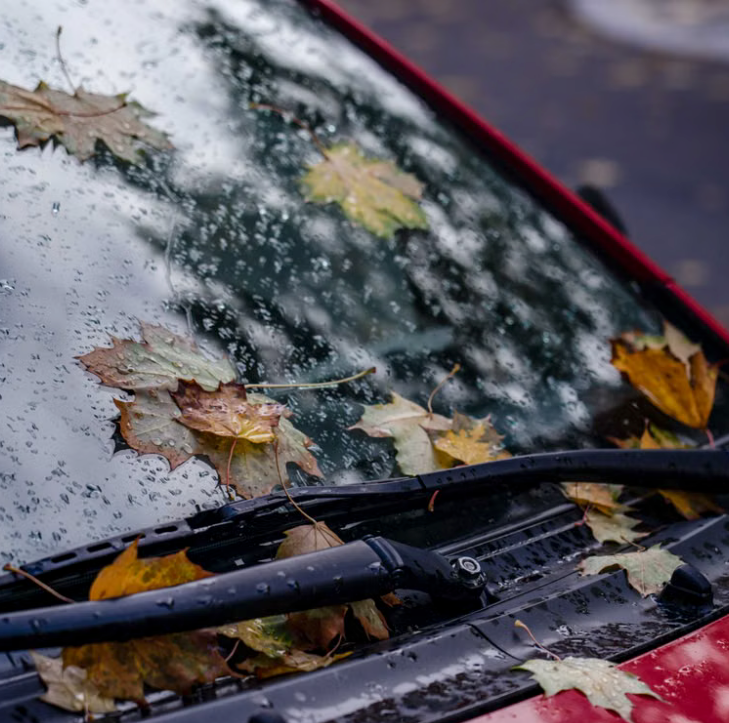
Nobody checks their windshield on a dry, sunny day. Most drivers find out it has a problem in the middle of the first heavy rain, at night, on a road they'd rather see clearly.
The good news is that you don't need tools, a garage or an afternoon. Five minutes is enough to spot the most common problems before the weather turns. Here's the checklist.
Minute 1: The water test
This is the fastest way to know what state your glass is really in.
- Rinse the windshield with water to remove loose dust.
- Pour or spray clean water over the glass.
- Watch what the water does.
If it forms small beads and runs off, your glass is in good shape.
If it spreads into a wavy sheet or clings in patches, there's a film on the surface. It's usually a mix of road grime, oil, exhaust residue and sometimes wax from car washes, and it's often invisible on a dry windshield. It's also what makes wipers smear and headlights spread into glare at night.
Minute 2: Look for damage
Stand outside the car and look at the glass at an angle, ideally with the sun low or a flashlight held against it.
- Chips and cracks. A small chip can spread with temperature changes and vibration, so it's worth having it checked by a glass specialist sooner rather than later.
- Pitting and scratches. Tiny pits from sand and gravel scatter light, especially at night. No cleaner or treatment can remove them, and heavy pitting is one of the reasons glass gets replaced.
If the glass is damaged, cleaning won't fix it. That's better to know now than during a storm.
Minute 3: Check your wipers
Wiper blades wear out quietly. Here's what to look for:
- Rubber edge: Run a finger along it. Cracks, splits, stiffness or a rounded, worn edge mean it's time to replace it.
- Dirt on the blade: Wipe the edge with a damp cloth. If it comes away black or gritty, the blade is spreading that back onto your windshield.
- Performance: Wet the glass with washer fluid and run the wipers. Streaks, bands, skipping or squeaking all point to a worn or dirty blade, or to a film on the glass.
Many manufacturers suggest replacing wipers roughly once a year, and sooner if you park in strong sun or drive in harsh weather.
Minute 4: Washer fluid and nozzles
In wet weather you'll use your washer more than you think, especially behind trucks and buses that throw up spray.
- Top up the reservoir, using proper washer fluid rather than plain water.
- Test the spray. It should hit the glass in the right place. If a jet is weak or blocked, clear it carefully with a fine pin.
Minute 5: Inside glass, lights and demister
Rain problems often start on the inside.
- Clean the inside of the windshield with a clean microfiber cloth and glass cleaner. Interior film from dust and dashboard materials is a common cause of hazy glare.
- Check your headlights. Make sure your dipped beams work. Dirty or misaligned lights make wet roads much harder to read.
- Test your demister and air conditioning. Fogging tends to appear exactly when you're already struggling to see.
What your results mean
- Water beads and wipers are clean: You're in good shape. Just keep an eye on it as the season goes on.
- Water spreads into a sheet: The glass needs proper cleaning. Rinsing alone won't remove a film that has bonded to the surface.
- Wipers streak or skip: Clean the blades first, then replace them if the rubber is worn.
- Chips, cracks or heavy pitting: Have the glass looked at by a specialist.
Step 2 for most drivers: deal with the film
If your water test showed a film, that's the one item on this list you can't fix with a rinse or a new blade. You need something that cuts through oily film and residue.
ClearShield™ is designed for this. It removes grime and oily film and leaves a water-repellent finish in one application, which helps water bead up and roll away so your wipers have less to do.
- Rinse the windshield with water to remove dust and loose dirt.
- Activate the sponge: shake well, then press the center until foam appears.
- Apply evenly with consistent pressure.
- Rinse immediately and thoroughly. Don't let any residue dry.
The last step matters most, because leftover residue is a classic cause of streaks and skipping wipers.
The 5-minute checklist
- ☐ Water test: does the water bead or spread?
- ☐ Glass inspected for chips, cracks and pitting
- ☐ Wiper blades checked and cleaned (or replaced)
- ☐ Washer fluid topped up, nozzles working
- ☐ Inside of the windshield cleaned
- ☐ Headlights and demister working
Final thoughts
Being ready for the rainy season isn't about one big job. It's a handful of small checks that make sure the glass, the wipers and the lights all do their part. Do them now, while the roads are dry, and the first storm won't catch you off guard.
If your water test showed a film, ClearShield™ is designed to clean it and leave a water-repellent finish in one quick application, so you can head into the wet months with a cleaner, clearer view.
Shop ClearShield™ → https://get-rainova.com/products/clearshield™-all-in-one-windshield-treatment

Leave a comment
This site is protected by hCaptcha and the hCaptcha Privacy Policy and Terms of Service apply.