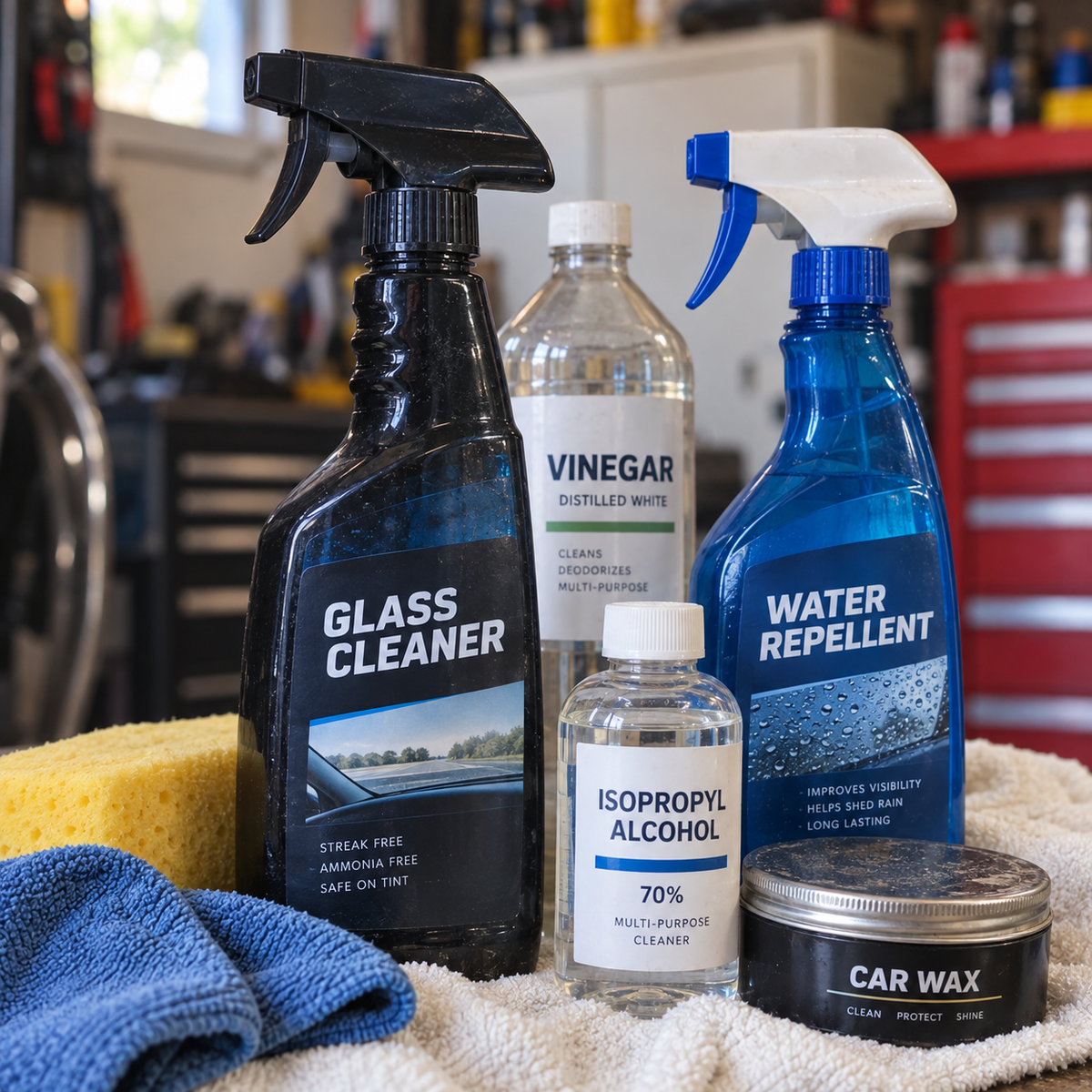
When a windshield looks hazy or water won't run off it properly, most people reach for whatever is already at home: white vinegar, dish soap, a bottle of isopropyl alcohol from the medicine cabinet.
They're cheap, easy to find, and all three do something useful. But they don't all do the same thing, and one of them can leave your glass in worse shape than before.
Here's what each one actually does, where it works, and where it falls short.
The short version
- Vinegar is good against mineral deposits like hard water spots, but it doesn't handle oily film well.
- Dish soap cuts grease, but it's easy to leave a slick residue behind if you don't rinse very thoroughly.
- Isopropyl alcohol is the best of the three at dissolving oily film, but it evaporates fast and needs care around rubber and paint.
- None of them leaves anything on the glass to help water bead up afterwards.
White vinegar
What it's good for: Vinegar is mildly acidic, which makes it useful against mineral deposits. If your windshield has chalky white spots from sprinklers or hard water, vinegar is a common first attempt.
Where it falls short: Vinegar isn't very effective on oily film, road grime or wax, which are the usual causes of a hazy view and smearing wipers. It can also leave streaks if it dries on the glass.
Watch out for: Vinegar can dull paint and dry out rubber seals and wiper blades if it sits on them. A common mix is roughly equal parts vinegar and water, applied to the glass only, then rinsed off well. Never mix vinegar with bleach or other cleaning products, because the combination can release harmful fumes.
Dish soap
What it's good for: Dish soap is designed to cut grease, so it can lift some of the oily film from the glass. It's gentle, cheap and safe on most surfaces.
Where it falls short: The problem is rinsing. A few drops in a bucket of water is plenty, and if any soap is left behind it can leave a slick, streaky film on the glass, which is exactly what makes water spread instead of bead. Some dish soaps also contain additives that make this worse.
Watch out for: Don't pour dish soap or other household cleaners into your washer fluid reservoir. They can foam and are not designed for the pump and lines. Use it in a bucket, and rinse until the water runs completely clear.
Isopropyl alcohol
What it's good for: Isopropyl alcohol dissolves oils and dries quickly, so it's often the most effective of the three at removing oily film. Many DIY glass cleaners and washer fluids use alcohol for this reason. A common mix is roughly equal parts isopropyl alcohol and water in a spray bottle.
Where it falls short: It doesn't remove mineral deposits, and because it evaporates quickly it can leave streaks if you don't wipe it right away with a clean microfiber cloth.
Watch out for: Keep it off rubber seals, plastic trim and paint as much as you can, since repeated contact can dry them out. Use it in a ventilated area, and keep it away from heat and flames because it's flammable.
A note on household glass cleaners
Some household glass cleaners contain ammonia. That's generally fine on a flat window at home, but ammonia can damage window tint film and some dashboard plastics. If you use one on your car, use it on the outside of the windshield only, and check the label.
The catch: none of them leaves a protective layer
Even when they work, all three do only one job: they clean. Once the glass is clean, there's nothing on it that encourages water to bead up and roll away. Water will still behave the way water behaves on bare glass, and a fresh film will start building up again as you drive.
This is why some drivers clean their windshield thoroughly, see an improvement, and then find the same problems returning after a few weeks of driving.
What about polishes and strippers?
For heavy contamination or stubborn build-up from old treatments, some detailers use polishing compounds. That's a longer, more hands-on job, and it needs care, because used incorrectly it can damage the glass. For most drivers dealing with film and smearing, it's more than the job needs.
A simple way to check if your cleaning worked
- Clean the windshield with your chosen method and rinse it well.
- Pour or spray clean water over the glass.
- Watch what the water does.
If it forms small beads and runs off, your glass is clean. If it spreads into a wavy sheet or clings in patches, there's still a film on the surface, or your cleaner left a residue behind.
A one-step alternative
If you'd rather not test three different kitchen products, ClearShield™ is designed to remove grime and oily film and leave a water-repellent finish in a single application. That covers both the cleaning and the beading, so you don't need separate products for each step.
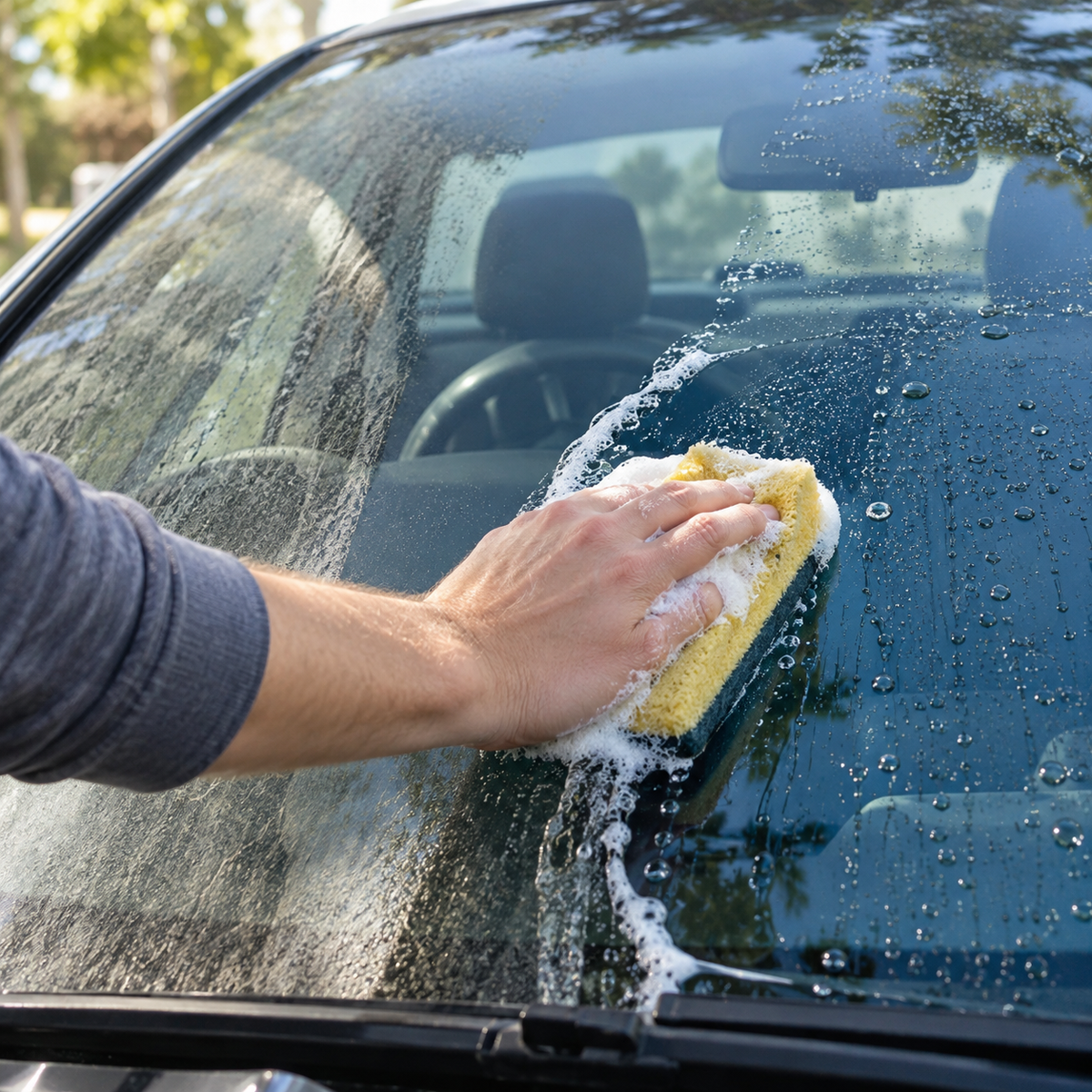
- Rinse the windshield with water to remove dust and loose dirt.
- Activate the sponge: shake well, then press the center until foam appears.
- Apply evenly with consistent pressure.
- Rinse immediately and thoroughly. Don't let any residue dry.
Rinsing well matters with any product, homemade or not, because leftover residue is one of the most common causes of streaks and skipping wipers.
Final thoughts
Vinegar, dish soap and isopropyl alcohol can each clean a windshield, but each has limits, and none of them helps water bead up afterwards. Match the product to the problem: vinegar for mineral spots, alcohol for oily film, and plenty of rinsing whatever you choose.
If you want cleaning and a water-repellent finish in one quick step, ClearShield™ is designed to do both, so you can get a cleaner, clearer view in the rain.
Shop ClearShield™ → https://get-rainova.com/products/clearshield™-all-in-one-windshield-treatment

Leave a comment
This site is protected by hCaptcha and the hCaptcha Privacy Policy and Terms of Service apply.